
What to do to Stay Safe
Beat the Heat: Stay Safe Outdoors
Trigger Temperatures
- Applies at ≥ 80°F. High-heat procedures required if ≥ 95°F.
- Quick Actions: Implement your department's Heat Illness Plan, 1 liter/hour water per employee. Shade required ≥ 80°F (or on request). Breaks every hour when working in direct sun.
- Monitor & Respond: Watch for symptoms, especially ≥ 95°F. Monitor employees during cool-down rests. Emergency plans must be clear and accessible at the job site.
- Outdoor Illness Factsheet PDFs available upon request.
Stay Safe Indoors
Trigger Temperatures
- Applies at ≥ 82°F
- Quick Actions:
- If feasible provide alternative work location or remote work option.
- Implement your department's Heat Illness Plan.
- Provide cool water nearby.
- Identify at least one designated cool-down area in the vicinity (maintained ≤ 82°F).
- Allow rest breaks as needed.
- Use fans if air temperatures are less than 95°F (will not work above that temperature).
- Monitor & Respond: Track temps & heat index. Watch for symptoms of heat illness during cool-downs. Report concerns immediately to your supervisors.
- Indoor Heat Illness Factsheet PDFs available upon request.
Rising temps can be dangerous—report heat risks at work!
If you notice an issue, do one of the following:
- Tell your supervisor.
- Call EH&S: 310-825-5689
Indoor temps over 82°F?
If you do not have a temperature monitoring device available you can request to have your worksite checked by EH&S.
If you need assistance with your department's Heat Illness Plan or have additional questions email: safetyandcompliance@ehs.ucla.edu
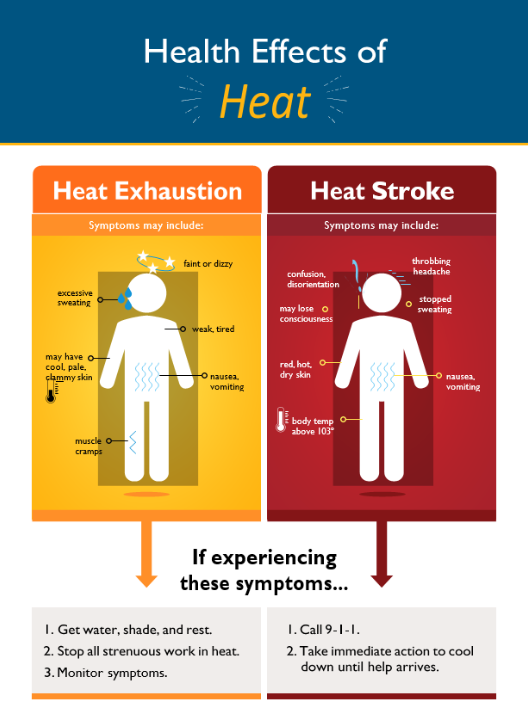
Even mild heat exposure can lead to discomfort—know the signs and what to do!
| Symptom | Signs | Treatment |
|---|---|---|
| Heat Rash | Itching/irritation of the skin from clogged sweat glands. | Keep the affected area dry. Apply powder if necessary to absorb moisture. |
| Heat Cramps | Painful spasms in arms, legs or abdomen. Hot, moist skin. | Drink fluids. Massage cramped areas. Rest in shade. |
| Heat Exhaustion |
| Move to cool, shaded area. Rest with legs elevated. Loosen clothing. Drink plenty of fluids. |
Heat stroke
|
| Call 911 immediately. Move to shade. Provide water. Apply cool, wet towels. Use ventilation or fan. |