
Under California law, a patient-specific physician prescription is not required for a licensed wholesaler to supply dangerous drugs or dangerous devices to an authorized research laboratory.
Wholesalers may distribute these products for legitimate research purposes provided that:
- The wholesaler is properly licensed by the California State Board of Pharmacy.
- The receiving research laboratory or institution is legally authorized to possess and use dangerous drugs.
- All applicable state and federal requirements are met, including DEA registration and approvals when controlled substances are involved.
While a physician prescription is not required in this context, wholesalers and research laboratories remain subject to regulatory oversight, recordkeeping requirements, and applicable compliance obligations..
Ordering
If you are with DGSOM and need to order pharmaceuticals or dangerous drugs or devices.
Submit Request
For none DGSOM lab: A wholesaler may furnish a dangerous drug or device to a laboratory without a physician’s prescription, as long as purchase records maintained.
Labs are responsible for setting up accounts and procuring their material. Vendors will request compliance documents to setup accounts.
Research laboratories should maintain accurate and up‑to‑date records related to the use of dangerous drugs and devices. Recommended records include, but are not limited to, the following:
- Purchase and acquisition records
Documentation showing the source, quantity, date of receipt, and disposition of drugs or devices obtained for research use. - Justification and use documentation
Records demonstrating the legitimate research purpose for the drugs or devices, such as references to an approved institutional protocol (e.g., BUA, ARC, RUA) and supporting documentation in laboratory notebooks or experiment records.
Maintaining these records supports regulatory compliance, institutional oversight, and audit readiness.
Dangerous drugs and dangerous devices must be stored in a secure location and maintained inaccessible to the public, consistent with how other hazardous chemicals are stored in the laboratory.
These materials should be clearly identified and must not be stored with controlled substances. Separation supports proper regulatory compliance, inventory control, and inspection readiness.
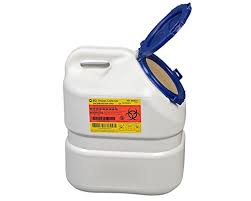
Dangerous drugs and dangerous devices must be disposed of in a pharmaceutical waste containers.
- Liquid materials should be placed in closed, leak‑proof containers to prevent spills or exposure.
- Pharmaceutical waste containers are not the same as biohazardous waste containers and should not be interchanged. These are typically white and blue and may also contain a biohazard label.
- Proper segregation and disposal help ensure regulatory compliance and protect personnel and the environment.
- Researchers are able to drop off their pharmaceutical waste containers at secured UCLA Medical Waste Accumulation sites.
- To request access visit
California law does not require a physician prescription or a physician license on file for a wholesaler to supply dangerous drugs to a research laboratory.
- A wholesaler may furnish a dangerous drug to a laboratory without a physician’s prescription, as long as purchase records are maintained. (Cal. Bus. & Profs. Code 4059(b)).
- A “laboratory” is defined under Cal. Bus. & Profs. Code 4031 as “a research, teaching, or testing laboratory not engaged in the dispensing or furnishing of drugs or devices but using dangerous drugs … for scientific or teaching purposes.”